Mobility data can reveal where and when demand moves; it cannot show on its own whether a place feels inclusive.
Pride Insights 2026 | Insights powered by TrueBusiness Mobility Data Platform and EGG Digital GeoAnalytics
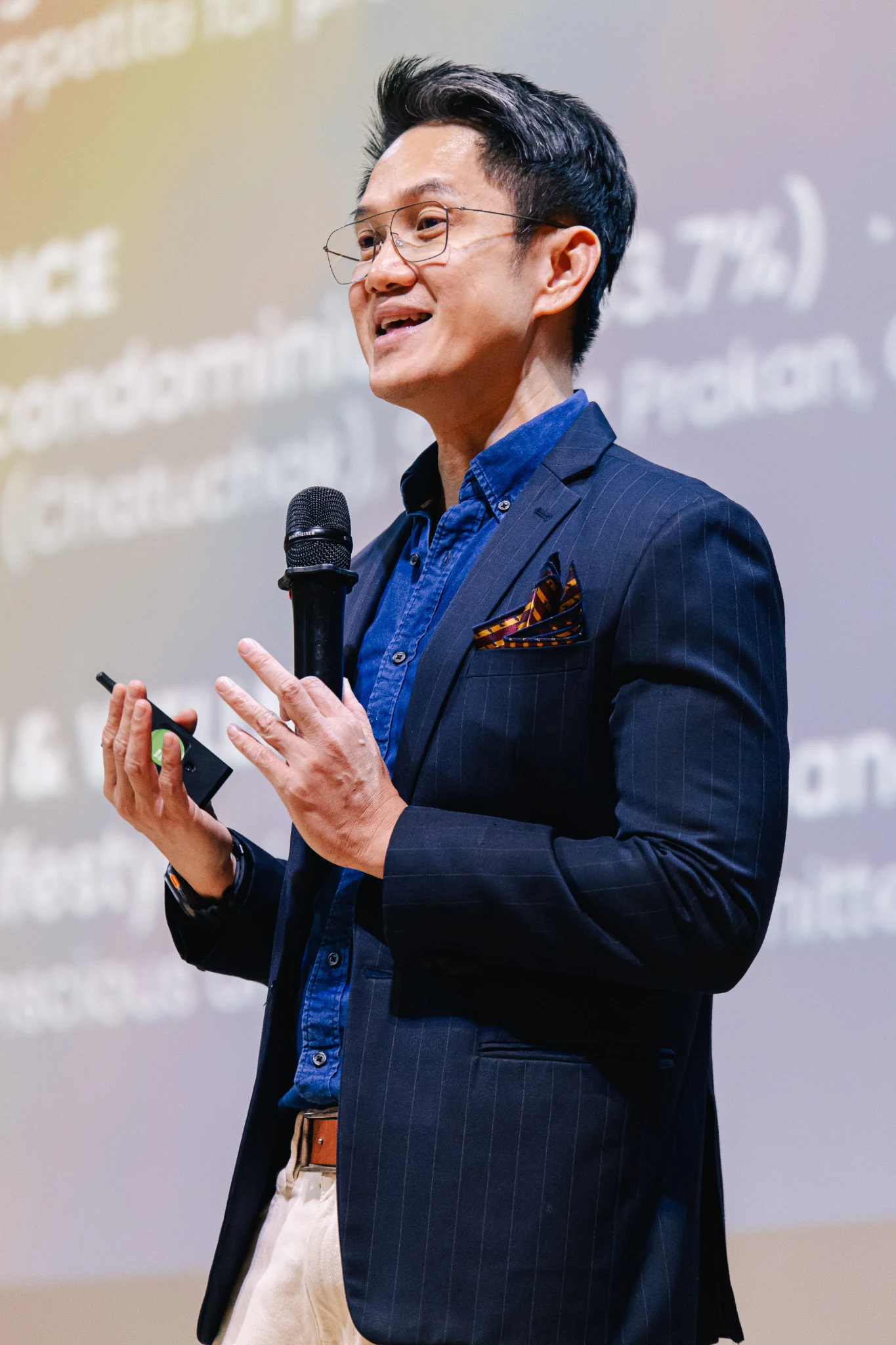
The evidence and findings in this article were presented by Dr. Teeradet Dumrongbhalasith, Chief Business Officer at True Corporation Plc., in “Pride Never Ends: The Endless Move of Diversity” at PRIDE MOVE: Thailand Pride Economy Forum 2026, organised by Pride Ready Asia Co., Ltd. at True Digital Park.
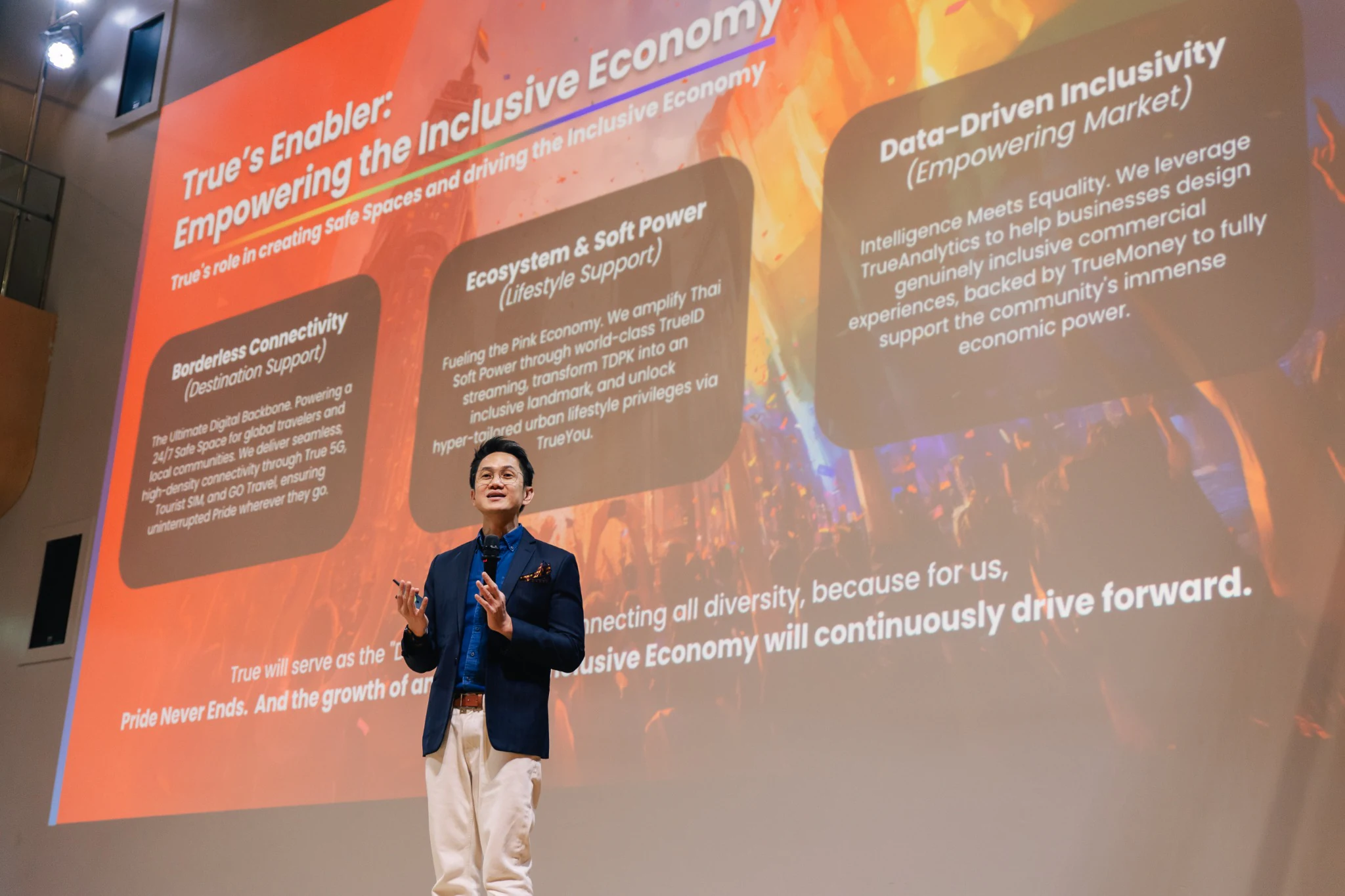
Pride Economy does not exist only inside an event—it moves through the city
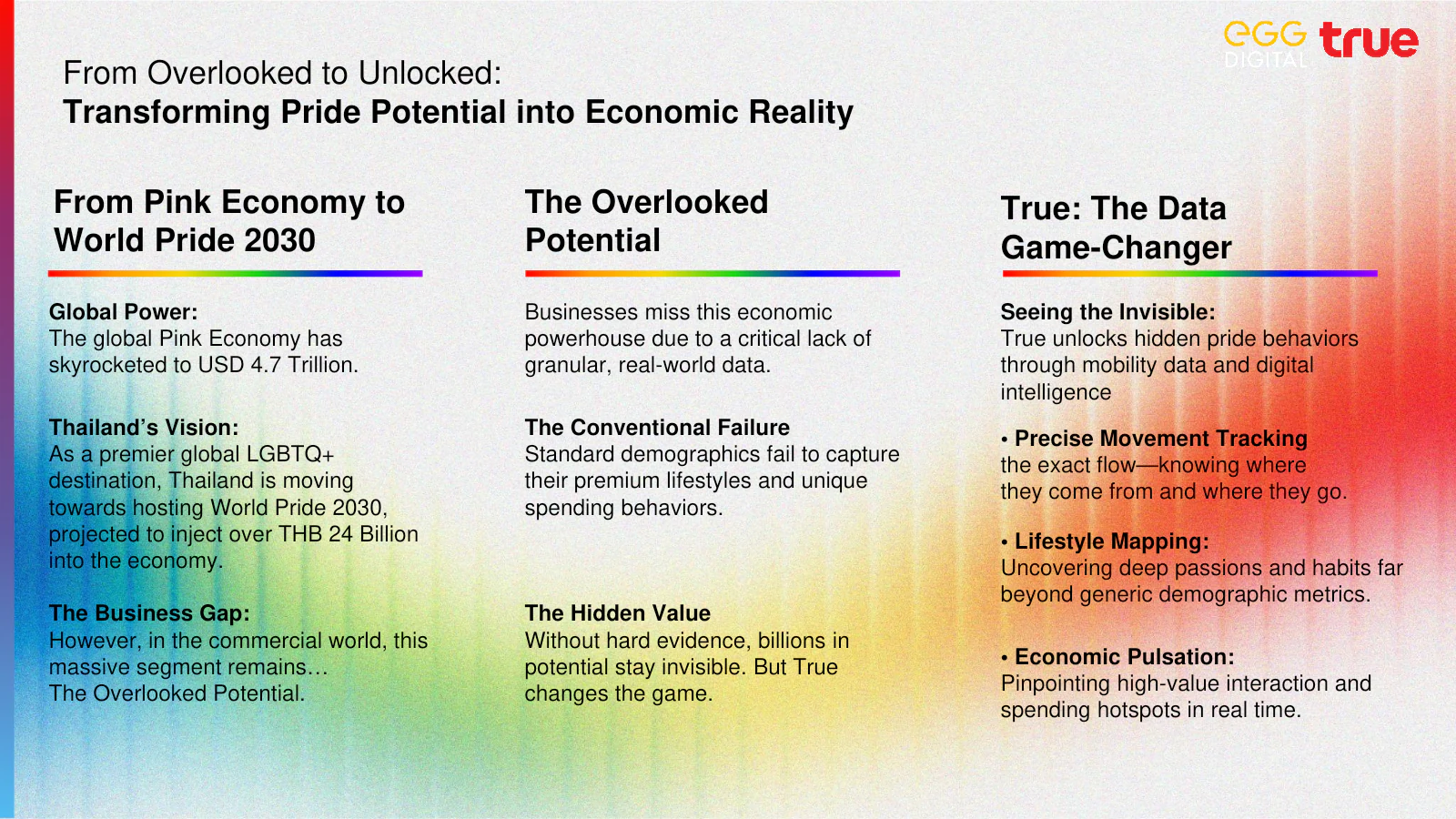
Pink Economy is often introduced through headline market values or purchasing power. Those numbers may establish scale, but they do not tell a hotel when demand will arrive, a city where transport capacity will be needed, or a local business when spending will move into its neighbourhood.
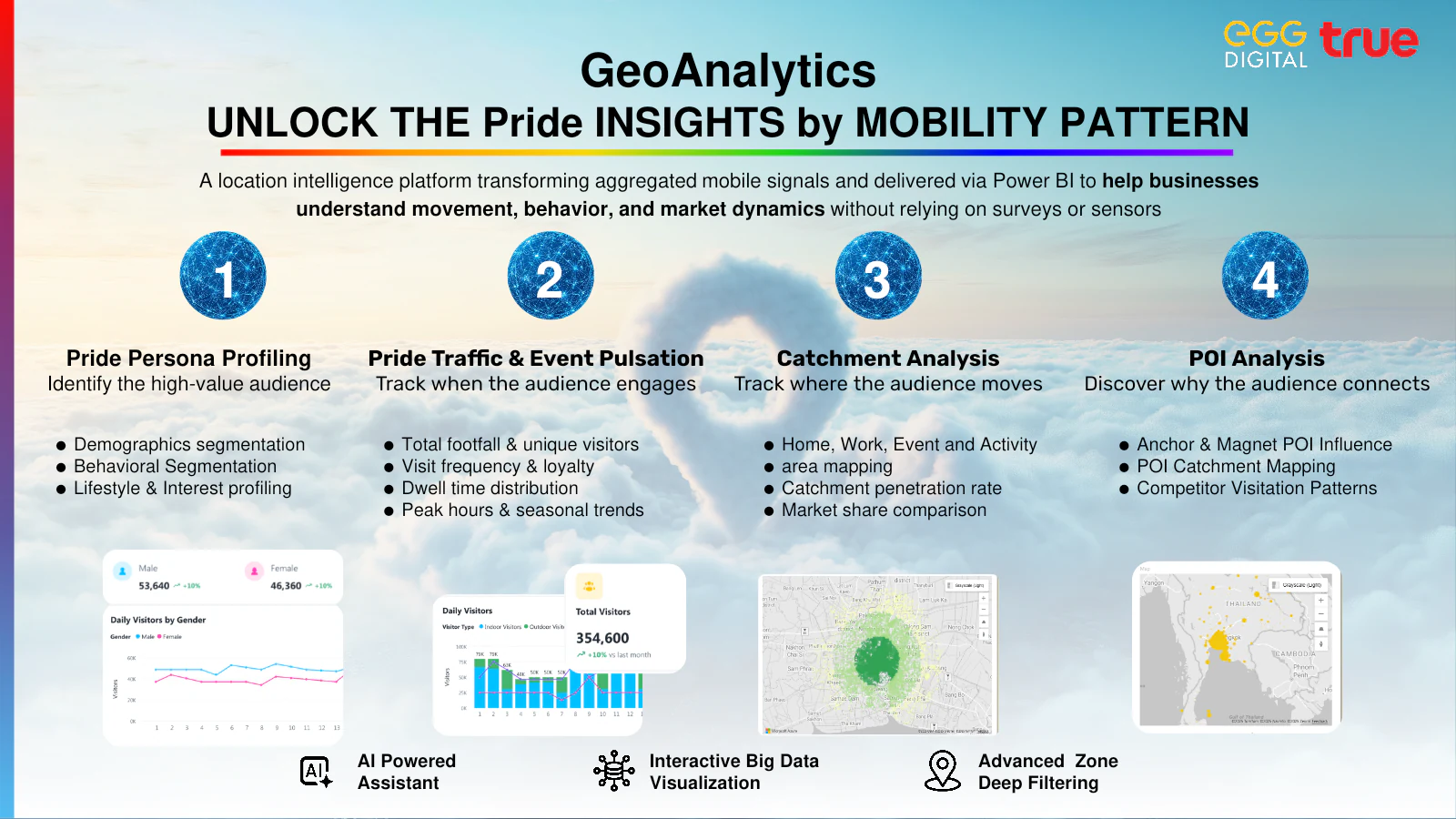
TrueBusiness Mobility Data Platform and EGG Digital GeoAnalytics offer a different view. Aggregated mobility signals make routes, density, attraction points and changes in demand visible across time and place. The result is not simply a profile of who attended an event, but a picture of how an audience interacts with the wider urban economy.
Reading the city through movement, time, catchment and place
GeoAnalytics translates aggregated mobile signals into location intelligence and market dynamics through four connected layers:
- Persona profiling — grouping audiences through aggregated demographic, behavioural and interest signals.
- Traffic and event pulsation — reading footfall, unique visitors, frequency, dwell time, peak hours and change over time.
- Catchment analysis — connecting home, work, event and activity areas to understand origins and movement.
- POI analysis — examining anchor and magnet places, venue catchments and patterns of destination visits.

A privacy-first boundary
TRUE states that the analysis uses aggregated and anonymous statistical data under Thailand’s PDPA framework. It is not intended to identify or disclose individuals. Research-grade use would still require a complete data dictionary, methodology and explicit thresholds.
Circuit Festival Asia 2025: an event as a window into the wider economy
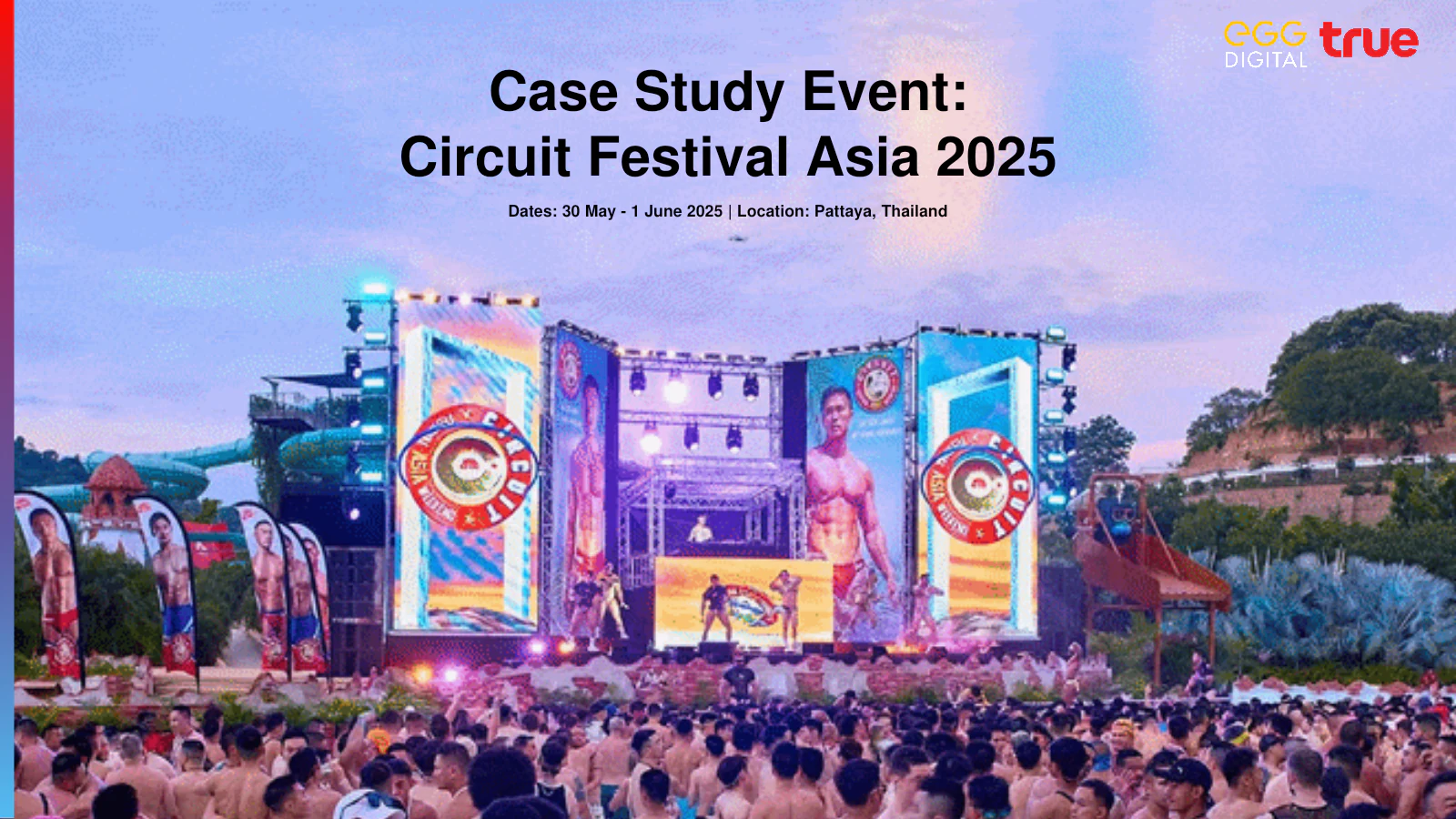
Circuit Festival Asia 2025 in Pattaya was used as a defined place-and-time reference. This made it possible to compare journeys before the event, concentration during peak periods and dispersal during breaks or afterwards, before connecting those patterns with audience and place signals.
The findings describe an event audience in an LGBTQIA+ context. They are not a proxy for the entire LGBTQIA+ community, and should not be generalised to queer women, trans travellers, families, older people or other segments without additional evidence.

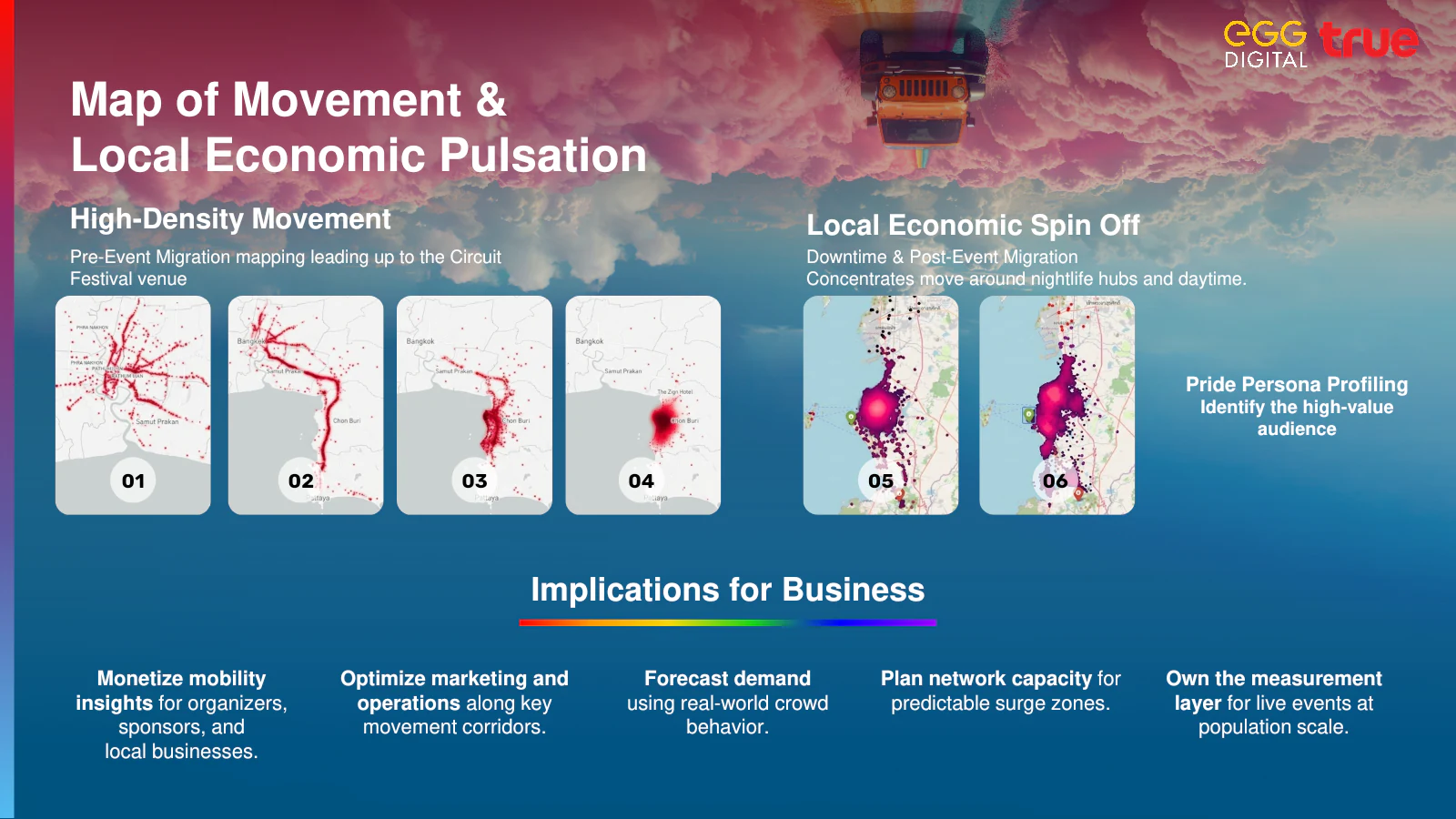
Insight 1 — The event creates a movement corridor beyond the venue
The data reveals a sequence rather than a headcount: participants enter the city before the programme, gather during peak moments and disperse into other areas during breaks and after the event. This corridor can create spillover opportunities for transport, accommodation, food, retail, wellness and nightlife.
What this layer can support
- Forecast demand and network capacity in surge zones.
- Place media, activations and services along actual movement corridors.
- Help hotels, restaurants and retailers plan for the timing of demand.
- Build a population-level measurement layer for major events.
Insight 2 — Local base, cross-area travel and international markets
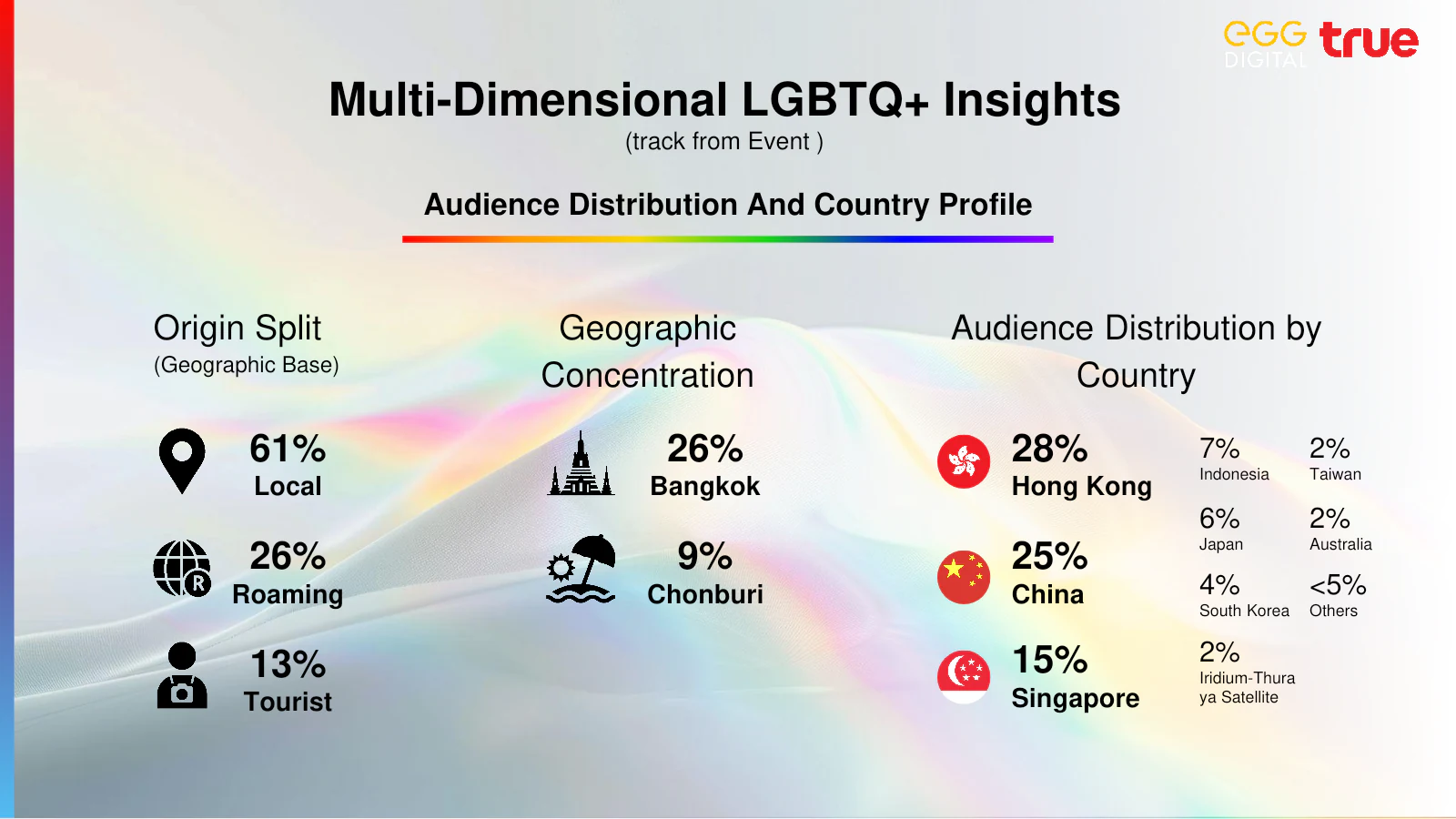
The analysis divides the audience into 61% local, 26% roaming and 13% tourist. International visitors were concentrated in Asia, led by Hong Kong, China and Singapore. The picture suggests that one event can simultaneously activate a domestic base, interprovincial movement and international demand.
Local, roaming and tourist are platform-defined categories that may depend on home location, observation period and network status. The percentages should therefore be read within the case-study boundary until the technical definitions are published in full.
Market meaning
Destinations and organisers are not serving one homogeneous market. They must design transport, accommodation, communications and services for residents, domestic travellers and international visitors at the same time.
Insight 3 — The Premium Urbanite
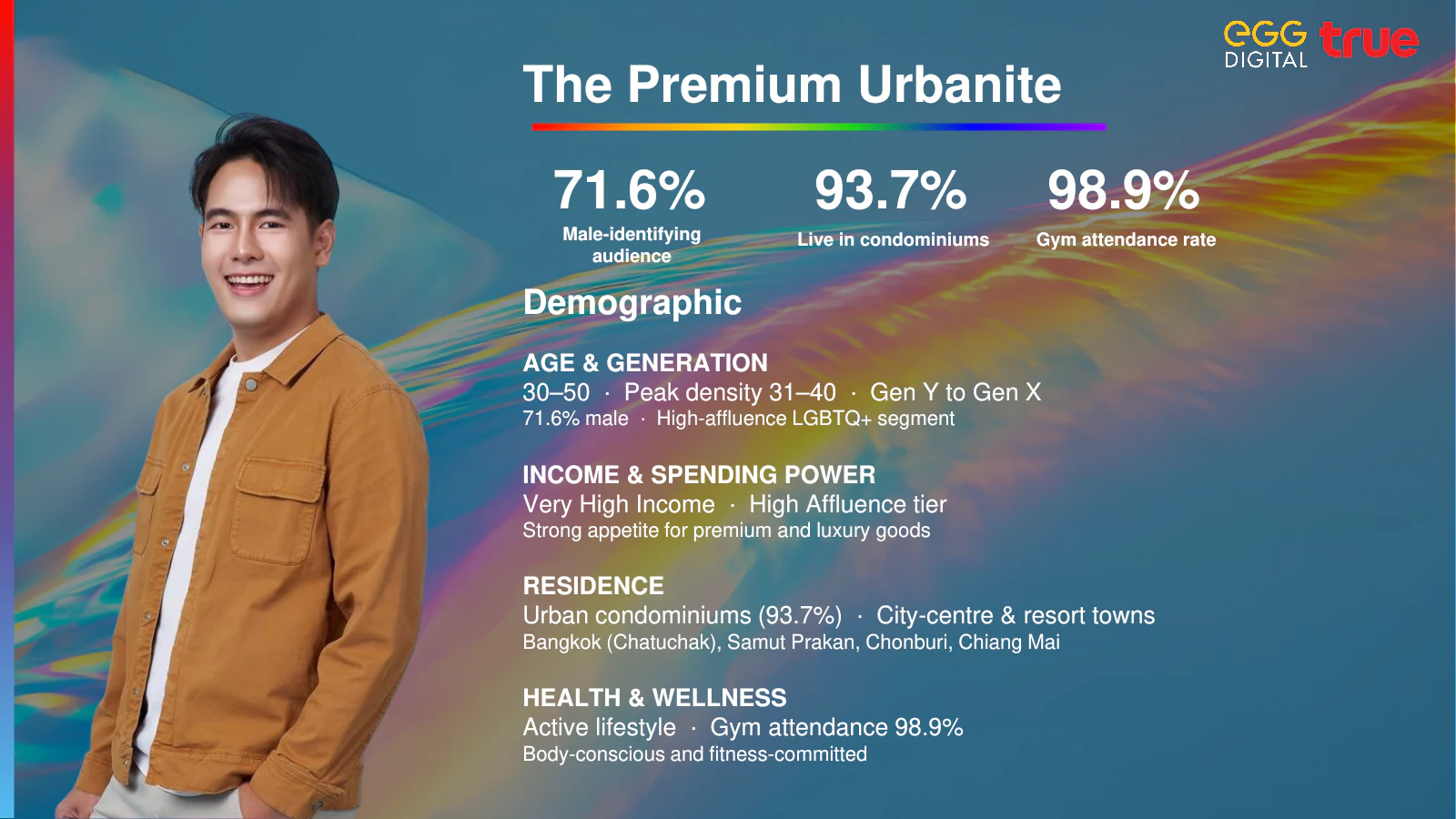
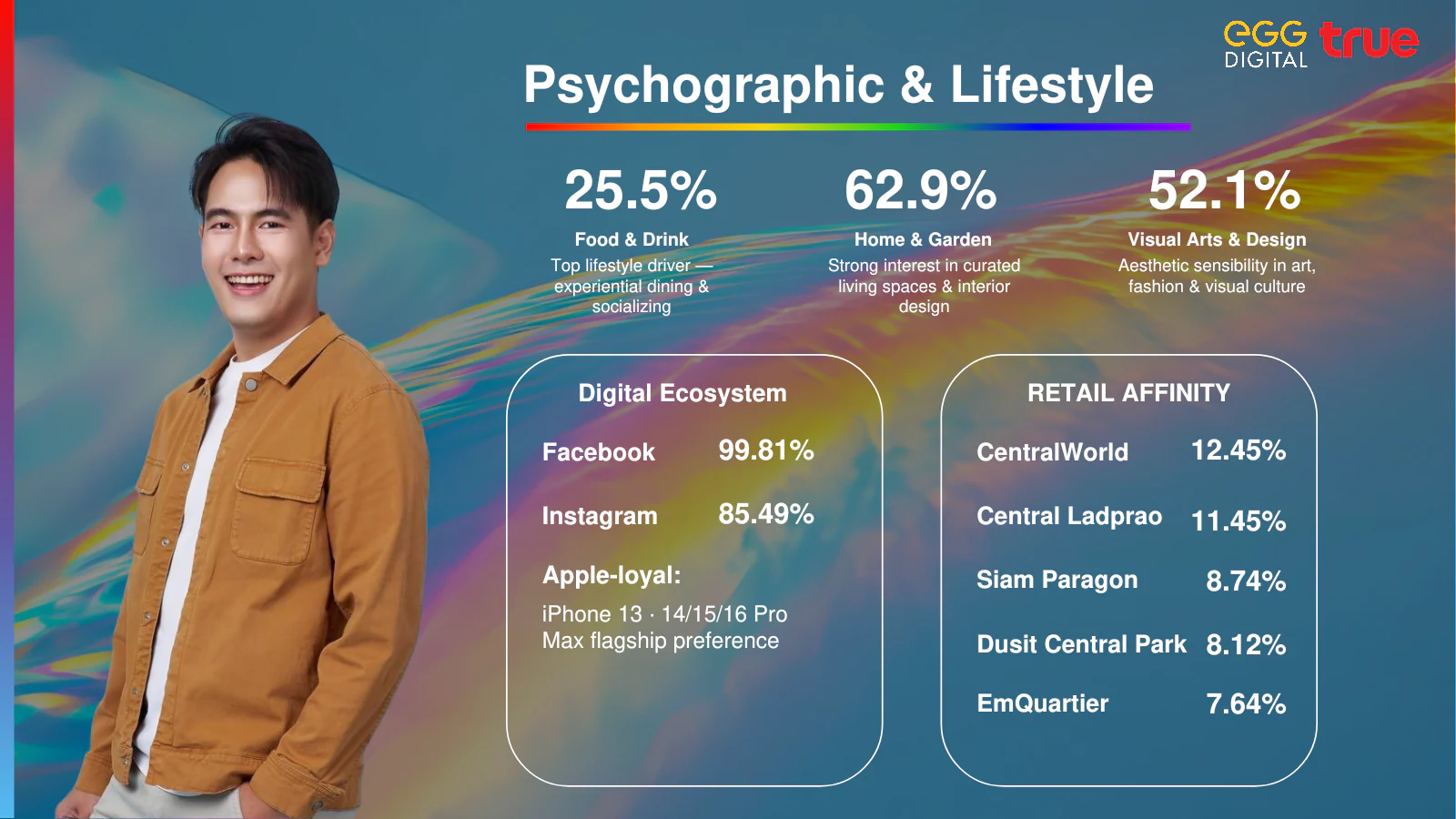
The primary age range was reported as 30–50, with the highest concentration at 31–40. The presentation also reported 71.6% male-identifying, 93.7% condominium residence and 98.9% gym attendance, alongside signals linked to income, premium consumption, property and lifestyle interests.
Interest signals included food and beverage, home and design, art, social media, premium smartphones and retail affinity. These indicators can help businesses ask sharper questions about products and experiences, but the persona is a planning hypothesis—not a definition of Pink Economy as a whole.
Insight 4 — From persona to a day in the audience journey
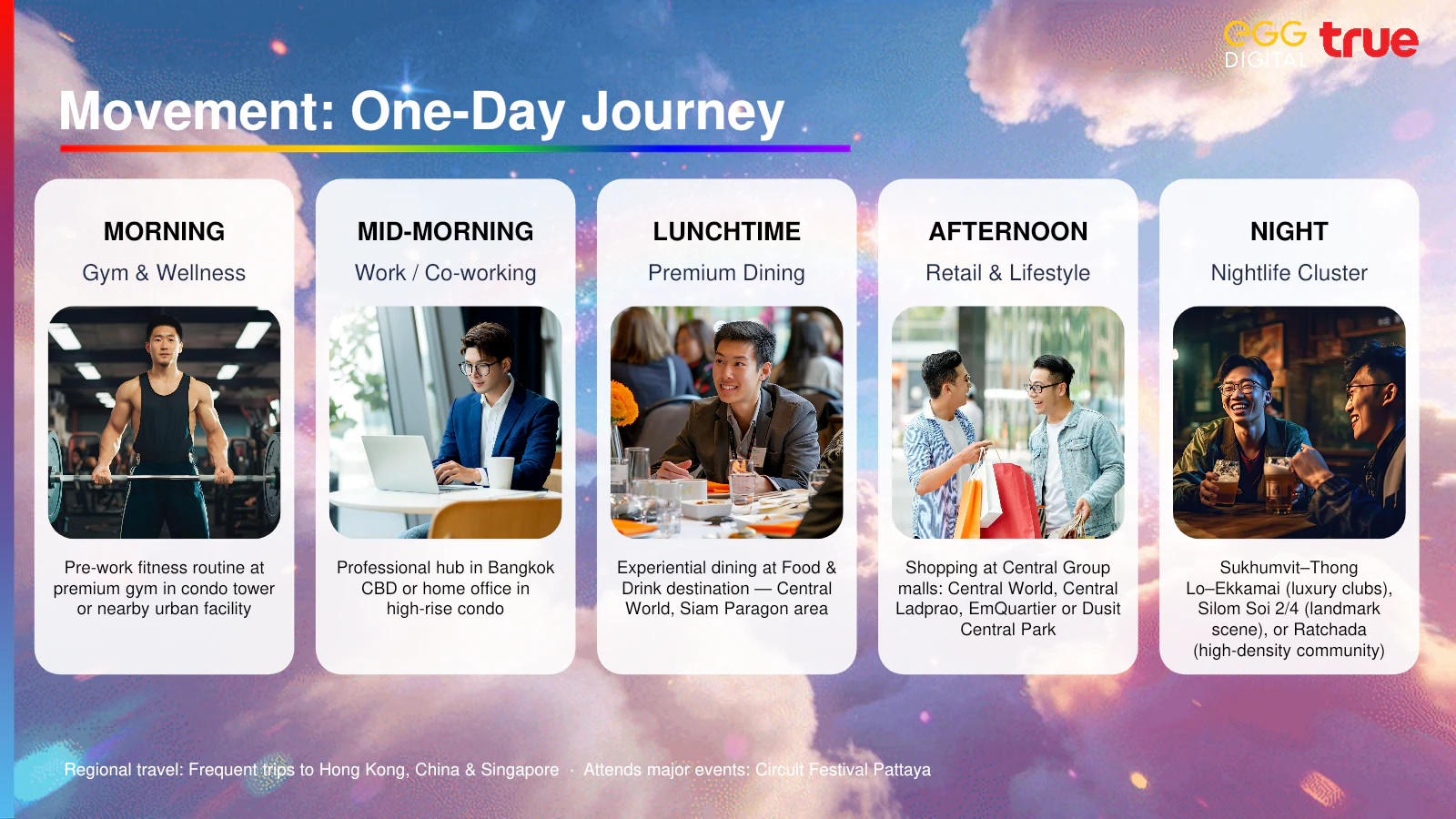
When time, place and interest signals are read together, they form a service journey: fitness in the morning, work or co-working, experiential dining, retail and lifestyle activities, followed by evening entertainment and nightlife. Location intelligence begins to show when people move from one service ecosystem to another.
What mobility data cannot answer on its own
Safety, quality of welcome, lived experience, access to toilets, complaint handling and the value returned to communities require service research and other forms of evidence. Movement can reveal where to investigate; it cannot by itself tell us whether a place feels inclusive.
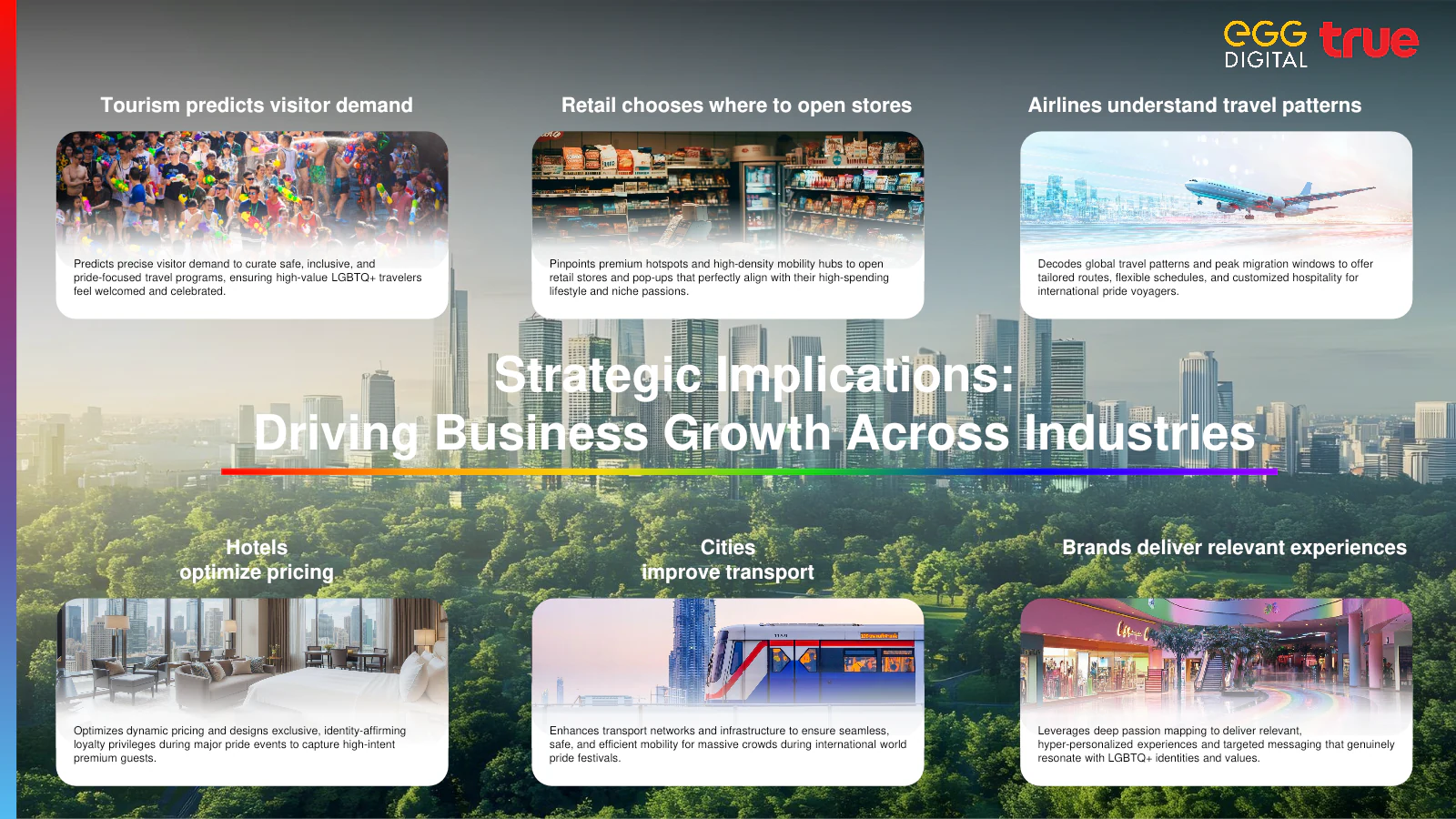
From insight to decisions across six industries
- Tourism — anticipate visitor demand and design programmes around audience patterns.
- Retail — choose locations and timing for stores or pop-ups around premium hotspots.
- Airlines — understand travel patterns and peak migration windows.
- Hotels — adjust pricing, packages and loyalty privileges around key events.
- Cities — prepare transport, infrastructure and capacity for concentrated movement.
- Brands — use passion mapping to design more relevant messages and experiences.
TRUE’s proposed role
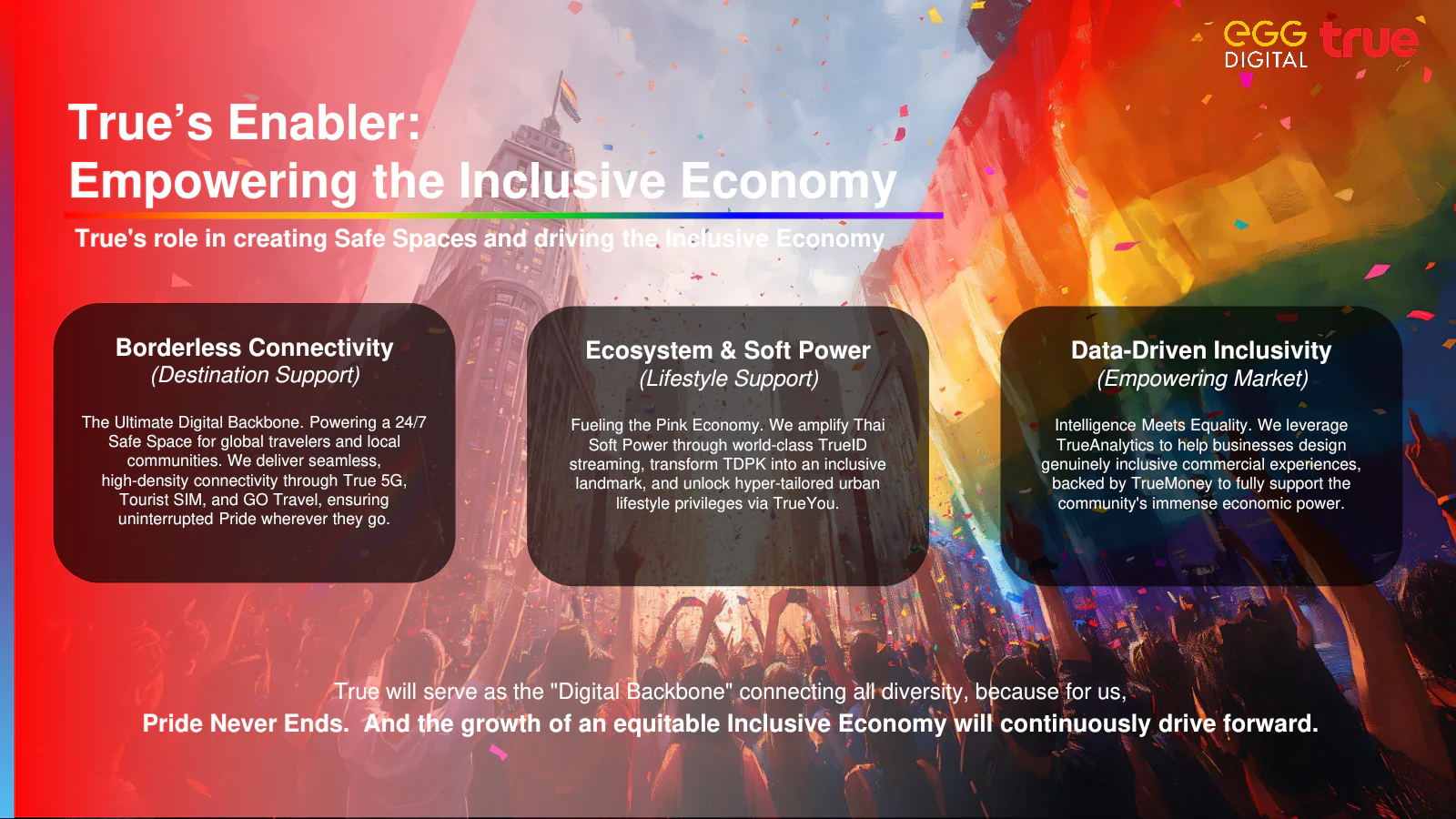
TRUE positions itself as a digital backbone across three layers: borderless connectivity, ecosystem and soft power, and data-driven inclusivity—connecting data, people and economic systems.
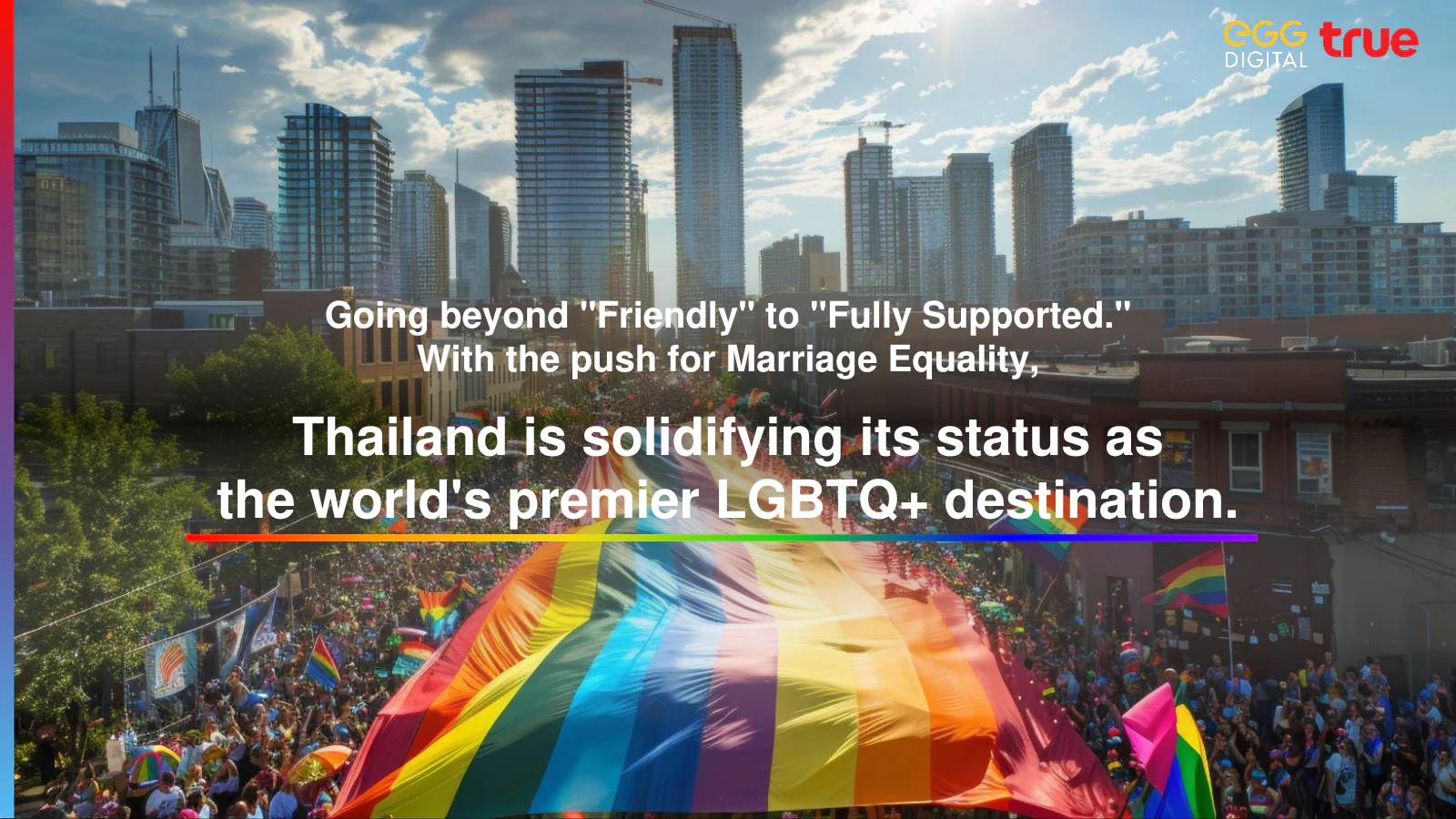
Pride Never Ends: from visibility to an Inclusive Economy that can be planned
Inclusive Economy needs an evidence infrastructure that helps government and business understand movement, needs and market opportunities with greater precision. Mobility Data and GeoAnalytics can turn previously invisible spatial behaviour into evidence for decisions.
The value does not end with a persona or heat map. It emerges when insight changes demand planning, transport, infrastructure, location, pricing and experience—and when organisations track whether those decisions produce better services and more inclusive growth.
From PRIDE MOVE to a capability pathway for Thai enterprises
PRIDE MOVE shows that aggregated mobility insights can identify visitor flows, demand and service gaps. Turning data into outcomes, however, requires fieldwork and community knowledge. Pride Ready Asia connects this evidence with a pathway of Data → Gap Scan → Community-led Capacity → Service and Market Readiness, helping Thai enterprises improve services and approach market opportunities with evidence behind them.
The goal is not a heat map or a single certificate, but a system that returns opportunity to enterprises and communities: data selects the problem, capacity closes the gap, market access opens demand, and an evidence loop tests whether better services create stronger experiences and measurable local value.

Circuit Festival Asia | Thailand vs Spain: creative rivals, economic partners
Thailand and Spain share an important strength: both have powerful LGBTQ+ festival cultures capable of turning celebration into momentum for cities. Spain brings an international Pride and festival infrastructure connecting rights, urban culture, tourism and creative IP. Thailand has grown through the energy of nightlife, hospitality, pageantry, performance and organisers who understand Asian audiences. The relationship therefore carries both competitive tension and mutual attraction—each side wants to show how distinctly its destination can perform, while both have cultural and economic reasons to exchange audiences, knowledge and opportunity.
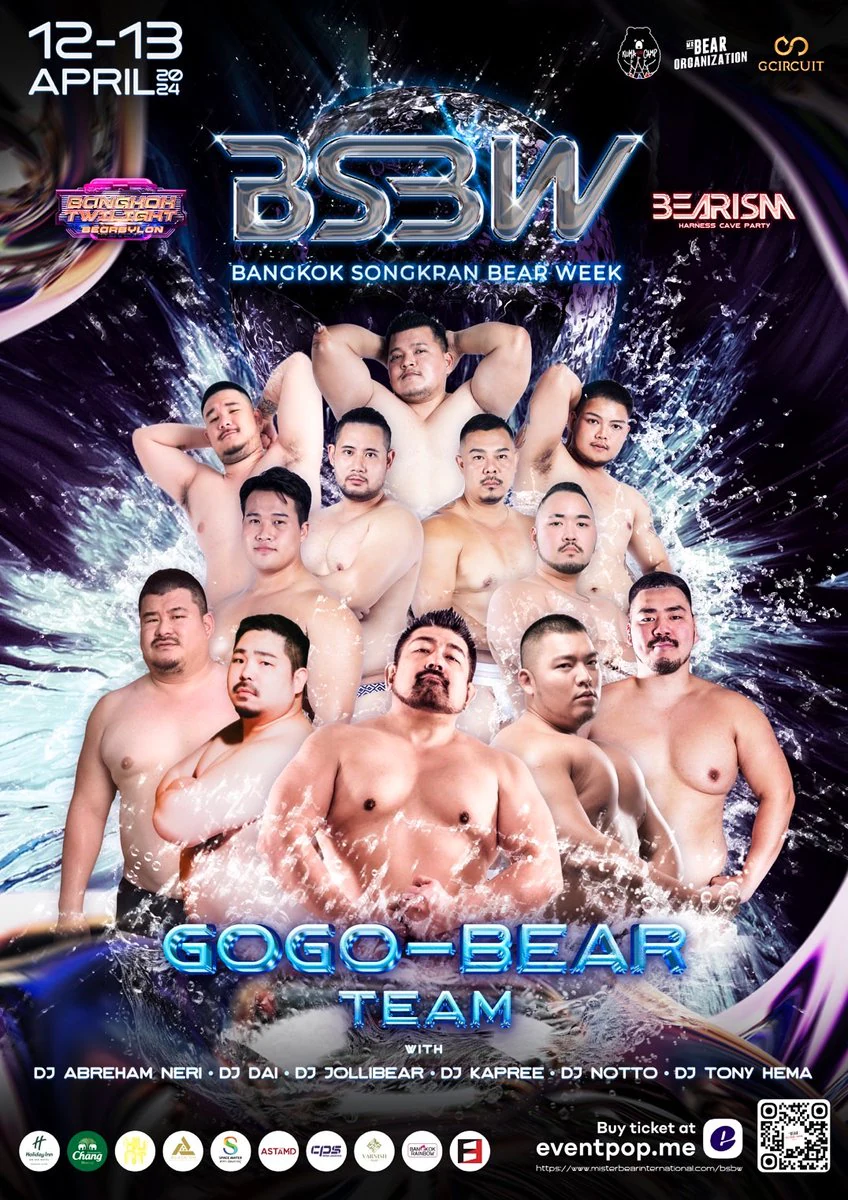
DJ Bearism offers another view of Thai production power. Emerging from the bear community, the party connects DJs, creative teams, venues, hotels, food, transport and audiences travelling across cities. Its value extends beyond the dance floor through employment, local services and visitors’ relationships with the destination. It also shows that Thailand is not only a host for international IP—it can create cultural IP and audiences of its own.
Circuit Festival is a Barcelona-born creative event IP developed by Matinée Group. Its Asian edition in Thailand is produced by Cloud 9—the team behind White Party Bangkok—in collaboration with Matinée Group. It shows how cross-border cultural IP can be translated through Thai knowledge of Asian audiences and production capability. That capability gained global recognition when White Party Bangkok entered DJ Mag’s Top 100 Festivals 2026 at No. 73—the first LGBTQ+ festival voted by fans into the ranking.

Spain contributes brand equity, production knowledge and access to a global audience. Thailand makes the experience work in a destination context—from hotels, restaurants, transport, health and wellness to drag and cabaret artists, costume and make-up workers, content creators, local organisers and service staff. The event’s value therefore extends beyond tickets and the venue, following visitors as they stay, eat, move, shop and participate in local life.
The Circuit Festival Asia 2025 case in Pattaya makes that connection more visible. Mobility evidence from TRUE and EGG Digital helps reveal source markets, timing, dwell patterns and movement corridors across the city. A Spanish event IP thus becomes a Thai visitor-economy case: evidence of how international creative property can generate demand for local enterprises and communities, without treating one event audience as representative of the entire LGBTQIA+ population.
WorldPride Thailand–Spain | The pitching stage in Phuket
Phuket will host the InterPride General Meeting & World Conference from Oct 29, 2026 to Nov 1, 2026, marking the first time an InterPride global conference is held in Asia. The gathering also provides the context for the WorldPride Thailand–Spain final pitching, bringing the two proposals together as Pride destinations with distinct strengths in culture, tourism and community networks.
Taking Thai evidence to the global tourism stage in Seville
Pongsatorn Archawapongsagorn, Founder and Executive Director of Pride Ready Asia, was selected to travel to Seville under the 2026 IGLTA Foundation Global Convention Fellowship and attend the IGLTA Global Convention from Nov 17, 2026 to Nov 21, 2026. The opportunity will bring Thai case evidence and enterprise voices into conversations with destinations, buyers and international tourism leaders, while bringing knowledge, relationships and opportunities back to Thailand.
As Founder and Executive Director of Pride Ready Asia and a participant in the TUI FutureShapers programme, Pongsatorn connects lessons from TPEF with the Seville pathway, carrying evidence from Pattaya and the voices of Thai enterprises into global conversations while bringing market knowledge, relationships and new questions back into Thailand’s ecosystem.

Seen through the energy of a ringside contest, Thailand and Spain each bring a signature punch. Barcelona contributes event IP, global brand equity and European networks; Thailand counters with knowledge of Asian audiences, production agility, hospitality culture and the ability to turn an event into destination value. Yet this is not a winner-takes-all fight—the more the two sides exchange, the larger the market becomes for both. Spanish IP generates revenue and opportunity in Thailand, while Thai evidence, capability and learning travel back to shape new conversations in Spain. The real scorecard is therefore local income, enterprises reaching new markets, partnerships becoming tangible opportunities and visitors finding reasons to return to both countries.
The bigger picture: from Visitor Economy to a Life Ecosystem
Seen beyond Pink Economy, Thailand Pride Economy is an opportunity to turn visitors into people who return, stay longer, work, invest and build lasting relationships with the country. Value does not exist only during Pride Month or inside tourism precincts; it flows through accommodation, food, health, mobility, creative culture, professional services and everyday life.
This direction aligns with the Tourism Authority of Thailand’s Value over Volume agenda and its ambition for Thailand to become Asia’s No.1 High-Value & Meaningful Destination. Through an LGBTQ+ lens, the policy opportunity is to move beyond seasonal Pride campaigns and build a year-round customer journey—from discovery and travel to spending, return visits and longer-term living.
At the same time, BOI mechanisms such as the Long-Term Resident Visa connect Thailand with work-from-Thailand professionals, highly skilled professionals, wealthy global citizens and retirees. A visa may enable entry, but retention depends on a Life Ecosystem: housing, health and wellness, finance, workspaces, community, safety, nightlife, culture and service providers capable of supporting diverse lives.
TRUE and EGG Digital’s data can become a connective layer in this system by translating mobility and place signals into evidence for service and destination design without identifying individuals. Thailand Pride Economy 365 can then operate as a model linking Demand → Service Readiness → Local Spending → Long-Stay and Investment → Measurable Impact.
What the evidence shows—and what it does not
This article draws on the Circuit Festival Asia 2025 case study and material presented by TRUE and EGG Digital at PRIDE MOVE: Thailand Pride Economy Forum 2026, organised by Pride Ready Asia Co., Ltd. The mobility evidence is aggregated and anonymous, making it useful for understanding patterns of place, time and demand at population level.
The figures and persona describe an event audience within a defined place-and-time window, not the entire LGBTQIA+ community. They are best used to form hypotheses, plan services and identify questions for further testing.
Research citation or economic-impact assessment would still require data definitions, baseline, sampling thresholds, a persona-scoring method and a way to separate event-attributable value from normal economic activity.
Sources and how to read this article
This article uses the supplied Pride in Motion manuscript, True’s published account, the Forum archive and the linked external sources. Mobility findings are aggregated and anonymous; the event case should not be generalised to the wider LGBTQIA+ population.
- True Blog — Tapping into the Pink Economy: A USD 4.7 Trillion Economic Opportunity — Article source
- TNN Wealth — Pink Economy: an economic opportunity worth more than USD 4.7 trillion — Article source
- Tourism Authority of Thailand — The Year of Transformation: Thailand’s 2027 Tourism Direction — Article source
- Thailand Board of Investment — Long-Term Resident Visa Programme — Article source
- IGLTA — 2026 Global Convention in Seville, Andalusia — Article source
- IGLTA Foundation — 2026 Global Convention Fellowship recipients — Article source
- DJ Mag — White Party Bangkok, No. 73 in Top 100 Festivals 2026 — Article source
- Matinée Group and Circuit Festival Asia — Circuit Festival Barcelona and its Asian edition — Article source
- InterPride — 2026 General Meeting & World Conference in Phuket, Thailand — Article source
Article imagery: Images supplied with the Pride in Motion manuscript; publication rights for PrideEconomy.org confirmed by the publisher on 3 September 2026.
Visible profile photograph: Forum 2026 archive portrait; source lineage is registered, while photographer credit, copyright, consent and reuse remain [to confirm].
Social preview illustration: Pride Economy Thailand visual archive · Published on the owner-operated site; original production record retained