01
The journey begins before the front desk
Service begins when a traveller searches, compares, books and makes contact. It continues through pre-arrival messages, check-in, delivery, incident support, departure, review and possible return. A welcoming campaign cannot compensate for a booking form, automated message or frontline process that contradicts it.
The design objective is not a ‘special’ experience that singles people out. It is to reduce avoidable uncertainty: ask the service need directly, explain where a legal name is required, protect privacy, and make the recovery route visible.
02
Inclusive communication is practice guidance, not proof
IGLTA Foundation guidance encourages inclusive language across touchpoints, booking options that do not force unnecessary assumptions, staff learning and feedback. Applied well, it helps organisations ask better operational questions.
The guidance is not a certification and does not prove that a service is safe or that outcomes improved. Teams still need to test their own systems, document constraints and connect policy to frontline decisions.
03
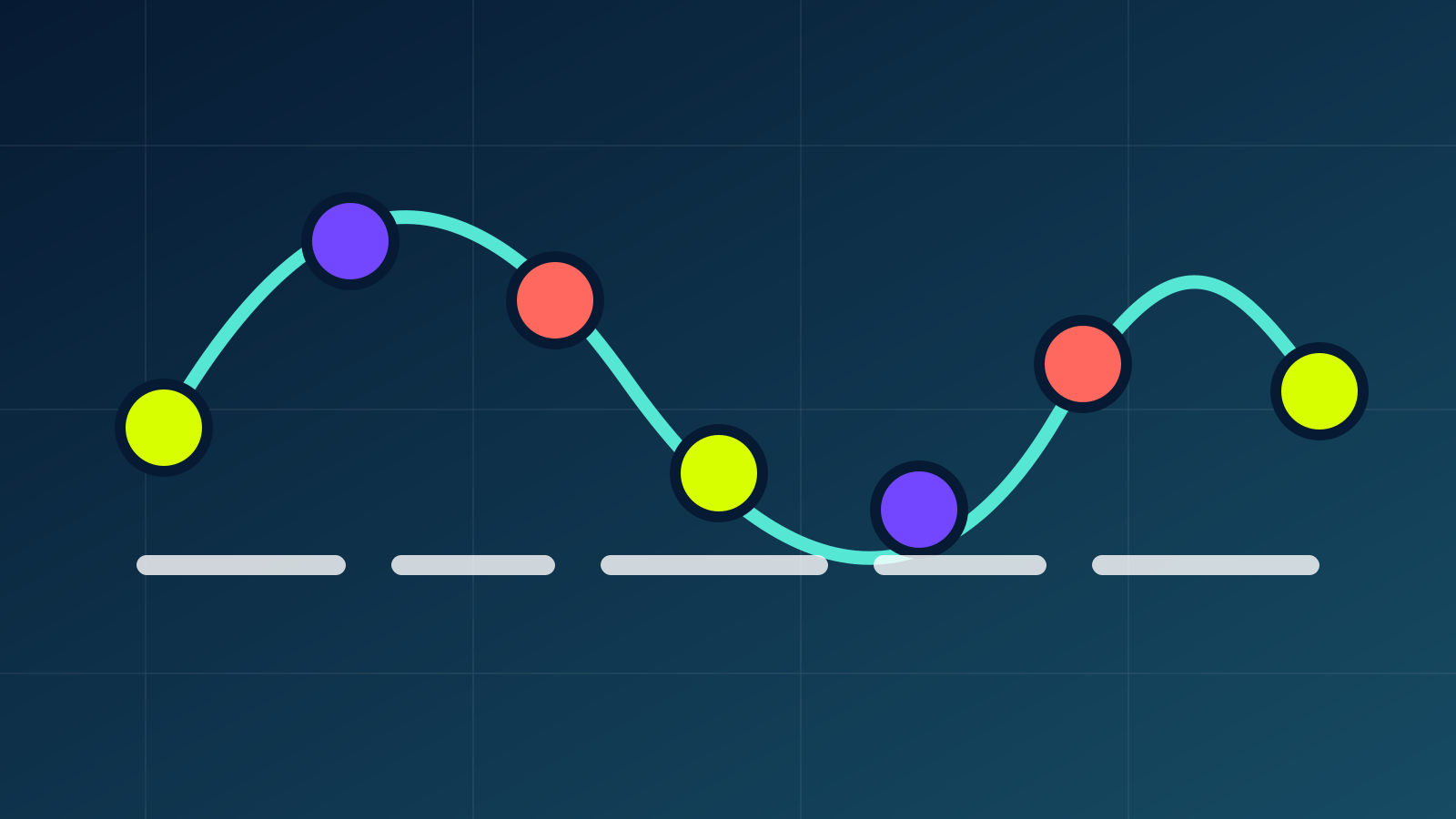
Map seven touchpoints and the hand-offs between them
Map discovery, comparison, booking, pre-arrival, arrival and delivery, incident support, and departure or follow-up. At each point, identify the information requested, the decision owner, what happens when the standard path fails and whether another organisation must take over.
Test several fictional scenarios rather than one representative persona. A trans traveller managing document privacy, an older couple seeking accessible support and a traveller who does not wish to disclose identity may expose different system gaps without requiring real people to share sensitive data.
ACTIONS TO START NOW
What a business can start reviewing and improving
- Map seven touchpoints and every hand-off.
- Ask service needs directly instead of guessing identity or relationships.
- Separate legal-data requirements from optional preferences.
- Create a short recovery path with a named decision owner.
- Test with multiple fictional scenarios and minimal data.
EVIDENCE & HOW TO USE IT
Return to the source before citing a statistic, law or recommendation
- 01 · IGLTA FoundationGuide for LGBTQ+ Inclusive Communication
Communication and service guidance; not certification.
Open source - 02 · IGLTA FoundationTrans & Gender Diverse Travel Guide
Planning and traveller-resource guidance; no safety guarantee.
Open source - 03 · Booking.com Newsroom2026 Travel Proud Research
Company-commissioned aggregate signal; not a universal preference.
Open source
No single profile represents all LGBTQ+ travellers. Guidance is not certification, identity-data collection is not a readiness requirement, and no route or provider is guaranteed safe.
Choose one traveller need and test the full hand-off
Use the 12 signals to select a question about visitor needs, then connect the test to a project with a recorded date and status. Do not use the signals to infer anyone’s identity.
Open the next step