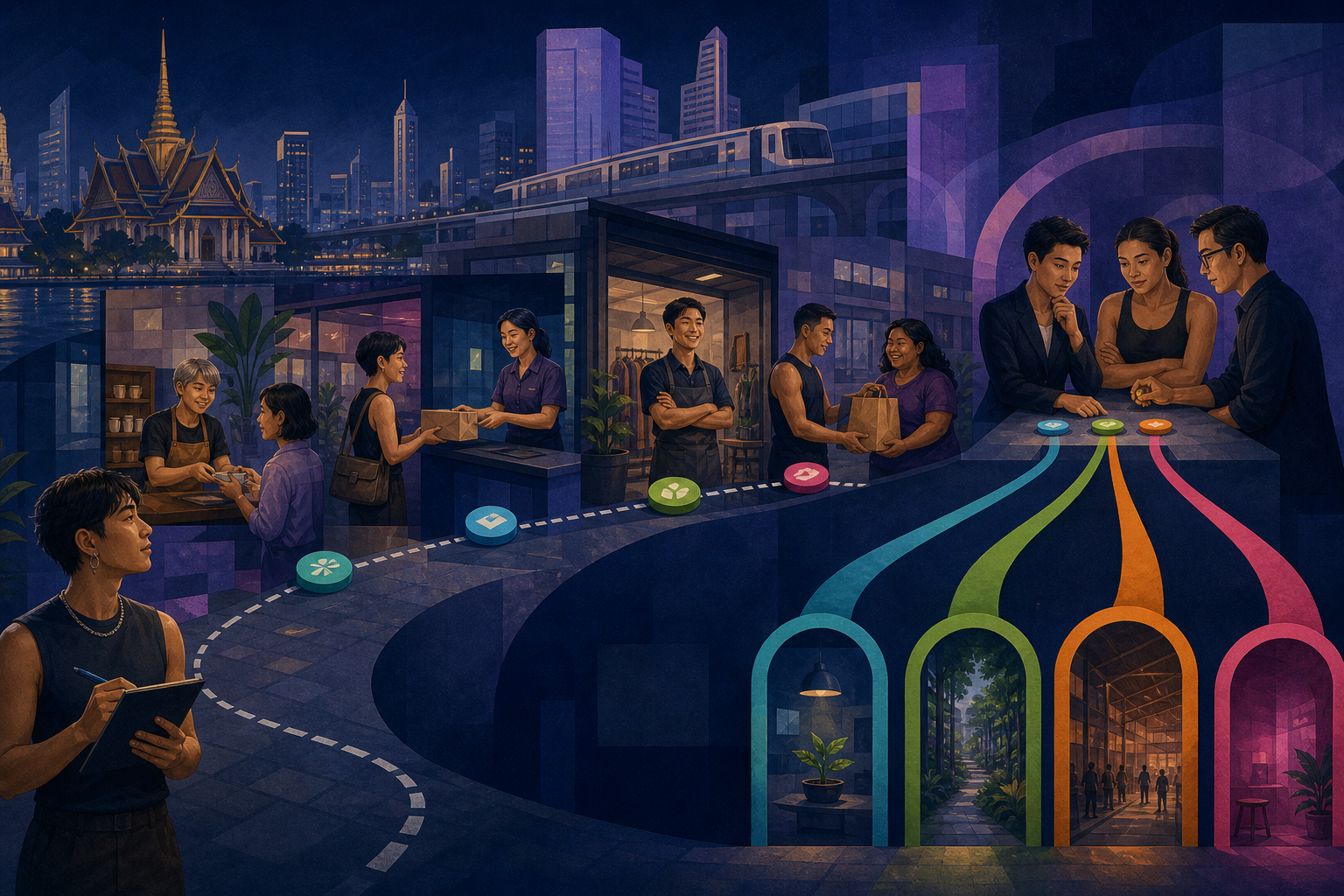
Visitors judge readiness through many small moments: information, travel, check-in, advice, health service and support when something goes wrong.
A bounded route helps a city learn which providers are ready, where hand-offs break and where local spending can flow.
Use that learning to improve, scale or stop—without claiming readiness beyond the evidence.
PUT IT INTO PRACTICE
Three steps from a question to testable work
Choose one connected route
Start with a real journey that links arrival, movement, information and selected services. Define where the test begins and ends instead of claiming readiness across the city.
Publish useful facts
Record opening hours, access conditions, booking rules, help contacts and alternatives at the level a traveler can use. Recheck facts that can change.
Test the hand-offs
Observe what happens when one provider refers a visitor to transport, care, support or another service. A route fails when the next step depends on guesswork.
SOURCES & BOUNDARY
Return to the source before citing or deciding
The destination criteria and traveler guide identify planning questions. Local verification, update ownership and direct traveler evidence are still required.
- GSTC Destination Criteria v2.0 with Performance Indicators and SDGsGlobal Sustainable Tourism Council
- Trans & Gender Diverse Travel GuideIGLTA Foundation and Gender Diverse Travel Advisory Group
Field-note framework—not a declaration that Bangkok or a route is fully inclusive or safe.
Sources last reviewed: 29 August 2026Migrated from the previous Pride Ready Asia editorial archive on 26 August 2026. The original publication date was not recovered and has not been invented.